
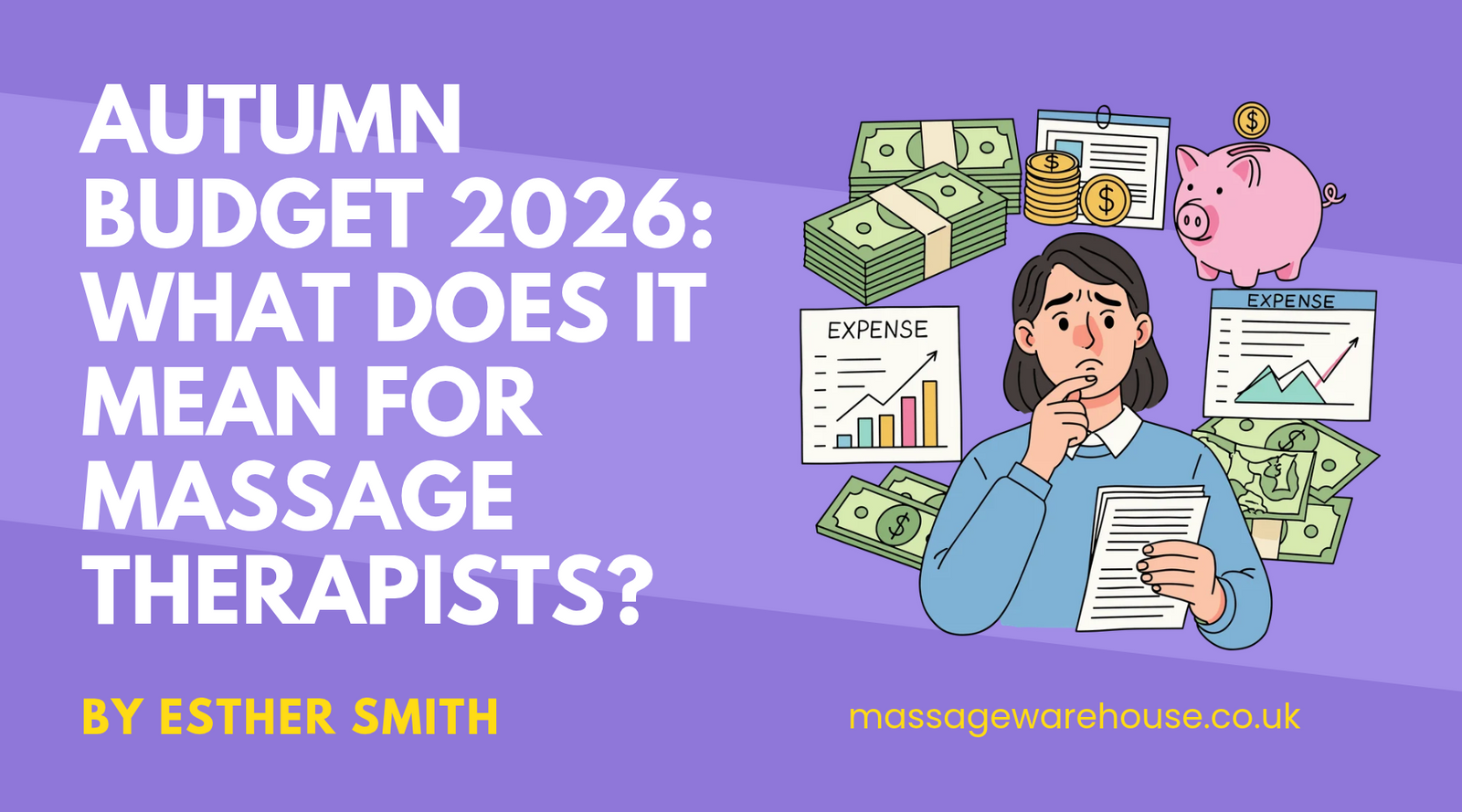
Autumn Budget 2026: What Does It Mean for Massage Therapists?

Autumn Budget 2026: What Does It Mean for Massage Therapists?

When the Chancellor announces a Budget, I imagine most massage therapists don’t sit down with a cup of tea and eagerly read through all the details!

But when you’re self-employed, it’s worth knowing how the changes might affect your business. Sometimes there are things tucked away in all those announcements that could make a real difference.

This year’s Autumn Budget, announced on 28th October, contains a few things I think are worth knowing about.

There’s some good news for therapists who are starting out or working part-time, a welcome change for those who use their cars for business, and some changes on the horizon to how we pay our tax.

So, I’ve sifted through the announcements so you don’t have to, and picked out the changes I think are most relevant to us as massage therapists, and whether they’re likely to make running our businesses any easier.

1. The trading allowance is increasing to £3,000

From April 2027

This could be particularly good news if you’re running your massage business alongside another job, working part-time or just starting to build your client base.

At the moment, the trading allowance is £1,000 per tax year. From April 2027, it’s increasing to £3,000.

The trading allowance allows you to earn a certain amount from self-employment without paying Income Tax on that income, provided you meet the qualifying conditions.

Let’s say you’re a newly qualified therapist, still working in your previous job and offering massage treatments one day a week.

You charge £60 per treatment and see around four clients a month.

That’s £2,880 over the year, which would fall within the new £3,000 allowance.

For someone testing the waters before committing to a full-time massage business, that could be really helpful.

Remember that the £3,000 threshold relates to your gross trading income, not what you have left after expenses.

But what if you’re already running an established massage business?

This is where it’s important to understand how the allowance works.

The £3,000 isn’t an extra tax-free amount you can automatically deduct from your profits.

You have a choice. You can either claim the trading allowance or deduct your allowable business expenses when calculating your taxable profit.

You can’t do both against the same income.

For example, if your massage business brings in £15,000 a year but you spend £5,000 on allowable expenses such as room rental, insurance, and other running costs, you’d be better off claiming your actual expenses rather than using the allowance.

But if you’re running a small practice from home, with relatively few expenses, the trading allowance might be worth considering.

For established therapists, the increase could mean a smaller tax bill if their allowable expenses are below £3,000 and they choose to use the allowance.

Is it good news?

Yes, particularly for therapists working part-time, those building a business alongside employment, and anyone who wants to start small before deciding whether to expand.

It could make the early stage of running a business a bit more financially attractive.

But once your business grows, your income and expenses will become much more important than the allowance.

If your total trading income falls within the allowance, you may not need to register for Self Assessment, although there are exceptions. You’ll still need to keep accurate records of your income. Everyone’s circumstances are different, so if you’re unsure, it’s worth getting some professional advice.

£3000


2. Good news if you use your car for business

The 55p mileage rate is now permanent, with another increase coming in April 2027

Earlier this year, the government increased the mileage allowance for cars and vans from 45p to 55p per mile for the first 10,000 qualifying business miles.

That increase was announced in June and took effect from 6 April 2026.

The Autumn Budget has now confirmed that the higher rate will be permanent.

And there’s more good news for therapists who cover a lot of miles. From April 2027, the rate for business mileage above 10,000 miles will increase from 25p to 35p per mile.

After years of the mileage rate staying at 45p while the costs of running a car continued to rise, I think this is a welcome change.

And it’s not just mobile massage therapists who can benefit.

When we think about claiming mileage, we often think of travelling to clients’ homes. But there are plenty of other business journeys that may qualify.

For example, you may drive to collect massage supplies, travel to a training course, visit a local business to discuss a potential collaboration, or attend a networking or business promotion event.

Of course, the journeys must genuinely be for business purposes, and ordinary commuting between home and your regular workplace doesn’t count.

But it’s surprising how quickly those small journeys can add up.

Let’s say you drive 2,000 qualifying business miles during the year.

At the old rate of 45p per mile, you could claim £900 in business expenses.

At 55p per mile, that’s £1,100.

That’s an extra £200 you can deduct when calculating your taxable profit.

If you use the simplified mileage method, the allowance covers the running costs of your vehicle, so you can’t also claim separately for petrol, insurance, servicing and similar costs.

Is it good news?

Definitely, particularly for mobile therapists, those who provide corporate massage and anyone who regularly travels for their business.

Even if you work from one treatment room, it’s worth thinking about the business journeys you make throughout the year.

My advice would be to get into the habit of recording them. A simple mileage log with the date, destination, purpose and distance of each journey is all you need to get started.

And if you haven’t been recording your business mileage, you may be missing out on allowable expenses.

car


3. Changes are coming to how we pay our Self Assessment tax

From April 2029

This one isn’t happening for a couple of years, so there’s no need to do anything just yet. But it’s worth keeping on your radar.

If you’ve been self-employed for a while, you’ll probably be familiar with Payments on Account.

Under the current system, many sole traders make two advance payments towards their next tax bill, one in January and another in July.

January is also when you pay any outstanding balance from the previous tax year.

And this is where things can get confusing, particularly when you’re relatively new to self-employment.

Imagine you’ve completed your first full year running your massage business and discover you owe £2,000 in tax.

You might expect to pay that £2,000 in January.

But if you’re required to make Payments on Account, HMRC could also ask you for another £1,000 towards the following year’s tax bill at the same time.

Suddenly, the £2,000 you thought you needed has become £3,000.

Then there’s another £1,000 due in July.

It’s easy to see how this can catch people out if they haven’t been putting enough money aside.

The government now plans to replace the current arrangement with smaller, more regular payments during the tax year, starting in April 2029.

The idea is to bring tax payments closer to when you actually earn the money, rather than having two large instalments.

The payments are expected to be automated, although the exact payment schedule hasn’t been finalised yet. The government will be working with taxpayers and other organisations on the details.

Is it good news?

Potentially, yes.

For therapists who find the January and July payments difficult to manage, smaller and more regular payments could make budgeting easier.

But there may be a downside too.

Massage businesses don’t always earn the same amount every month. You might have a particularly busy run-up to Christmas, followed by a quieter January, or take several weeks off during the summer.

Having to make regular tax payments during quieter periods could put pressure on your cash flow.

There may also be a transition period to manage when the new system begins.

For now, I’d suggest carrying on with one of the best financial habits you can develop as a sole trader: put a percentage of every payment you receive into a separate savings account for tax.

That way, when HMRC asks for their money, you already have it there.

tax


4. Making Tax Digital: more time to get used to it

For therapists joining MTD in April 2027

If you’ve been following the changes to Making Tax Digital for Income Tax, you’ll know that it’s being introduced gradually.

The first group of sole traders, those with qualifying income over £50,000, joined in April 2026.

The next group, with qualifying income over £30,000, is due to join in April 2027.

Under Making Tax Digital, you’ll need to keep digital business records using compatible software and send quarterly updates to HMRC, as well as completing your annual tax return.

For many therapists, particularly those who are used to keeping records in a notebook or spreadsheet and sorting everything out once a year, this is going to mean changing how they manage their bookkeeping.

The Budget has brought a little good news for the next group joining the system.

HMRC won’t apply late-submission penalty points to their first four quarterly updates for the 2027/28 tax year.

That gives therapists joining in April 2027 some time to get used to the process without immediately being penalised for late quarterly updates.

Is it good news?

I think so, although it doesn’t remove the extra work involved.

If you’re already using suitable bookkeeping software and keeping your records up to date, the change may not feel too significant.

But for therapists who are still doing their accounts once a year, it’s another reason to start developing better bookkeeping habits now.

It’s important to remember that the penalty easement doesn’t remove the requirement to keep digital records or submit quarterly updates.

And the income thresholds are based on qualifying income, broadly your gross self-employment and property income, rather than your profit after expenses.

late submission penalty


So, was this a good Budget for massage therapists?

Overall, I think there are some positives here, although how much you’ll benefit depends on how you run your business.

If you’re newly qualified, working part-time or building your massage business alongside another job, the increase in the trading allowance could be particularly welcome.

If you use your car regularly for business, the higher mileage rates are good news, especially with the cost of motoring these days.

And the planned changes to Self Assessment payments could eventually make tax bills easier to manage, although we’ll need to wait for the details before knowing exactly how they’ll work.

The extra breathing space for therapists joining Making Tax Digital is welcome too, even if it doesn’t remove the additional administration.

For established therapists with a busy practice, however, the immediate financial benefits may be fairly modest. The trading allowance won’t necessarily make any difference if you’re already claiming more than £3,000 in business expenses, and the mileage changes will only help if you use your vehicle for qualifying business journeys.

So I wouldn’t describe this as a Budget that’s going to transform the finances of the average massage business.

But there are some useful changes, and it’s worth understanding which ones apply to you.

What should you do now?

It would be worth checking whether the trading allowance could benefit your business, making sure you’re recording all your allowable business mileage, and reviewing how you put money aside for tax.

And if Making Tax Digital is coming your way, start thinking about how you’ll manage your bookkeeping under the new system.

One thing I’ve learnt from running my own massage business is that it’s often the small, everyday financial habits that make a big difference.

Keeping accurate records, claiming the expenses you’re entitled to and knowing what’s coming can save you money, time and a lot of unnecessary worry.

This article is intended as general information for UK self-employed massage therapists and is based on the Autumn Budget announcements of 28th October 2026. Some changes are subject to legislation or further guidance. Always check current HMRC guidance or speak to a qualified accountant about your individual circumstances.

About the Author

Esther Smith is a massage therapist who built her business from scratch after being made redundant at 49, working mobile, renting rooms, and eventually creating her own garden studio. Through that journey, she saw that many therapists struggle with the business side; understanding money, bookkeeping and tax, and how to consistently attract clients. She now helps therapists become confident business owners so they can build a profitable massage business that works with their lifestyle, energy, and commitments. Learn more at Building a Massage Therapy Business.


Also in Massage Warehouse Blog

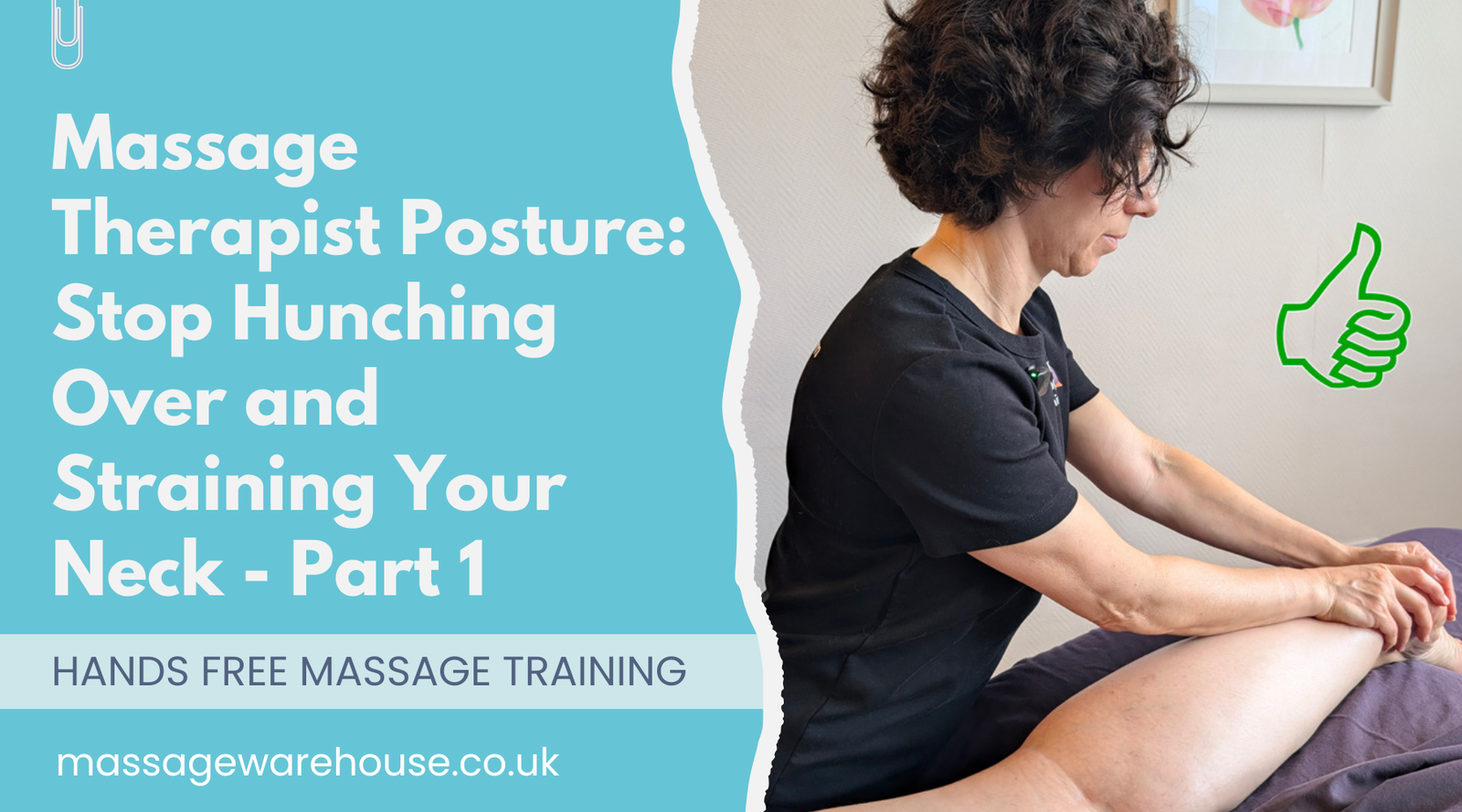
Massage therapist posture: Stop hunching over and straining your neck - Part 1

October 22, 2026 5 min read 0 Comments

Do you find yourself hunching over your massage table to watch your hands? Discover how head and neck position affect your posture, body mechanics and the way you work, plus practical tips to help massage therapists reduce strain and work more comfortably.

Read More
The “Refer-a-Friend” Scheme That Actually Works For Massage Therapists

September 21, 2026 6 min read 0 Comments

Learn how massage therapists can attract new clients and grow their massage business with a simple “Recommend a Friend” strategy designed to turn trusted client relationships into personal referrals.

Read More
Bookkeeping for Massage Therapists: Build Better Habits

August 11, 2026 6 min read 0 Comments

Bookkeeping can be easy to put off when you’re busy seeing clients. Discover simple habits to help massage therapists stay organised, track expenses and feel more in control of their massage business finances.

Read More