Your Cart is Empty


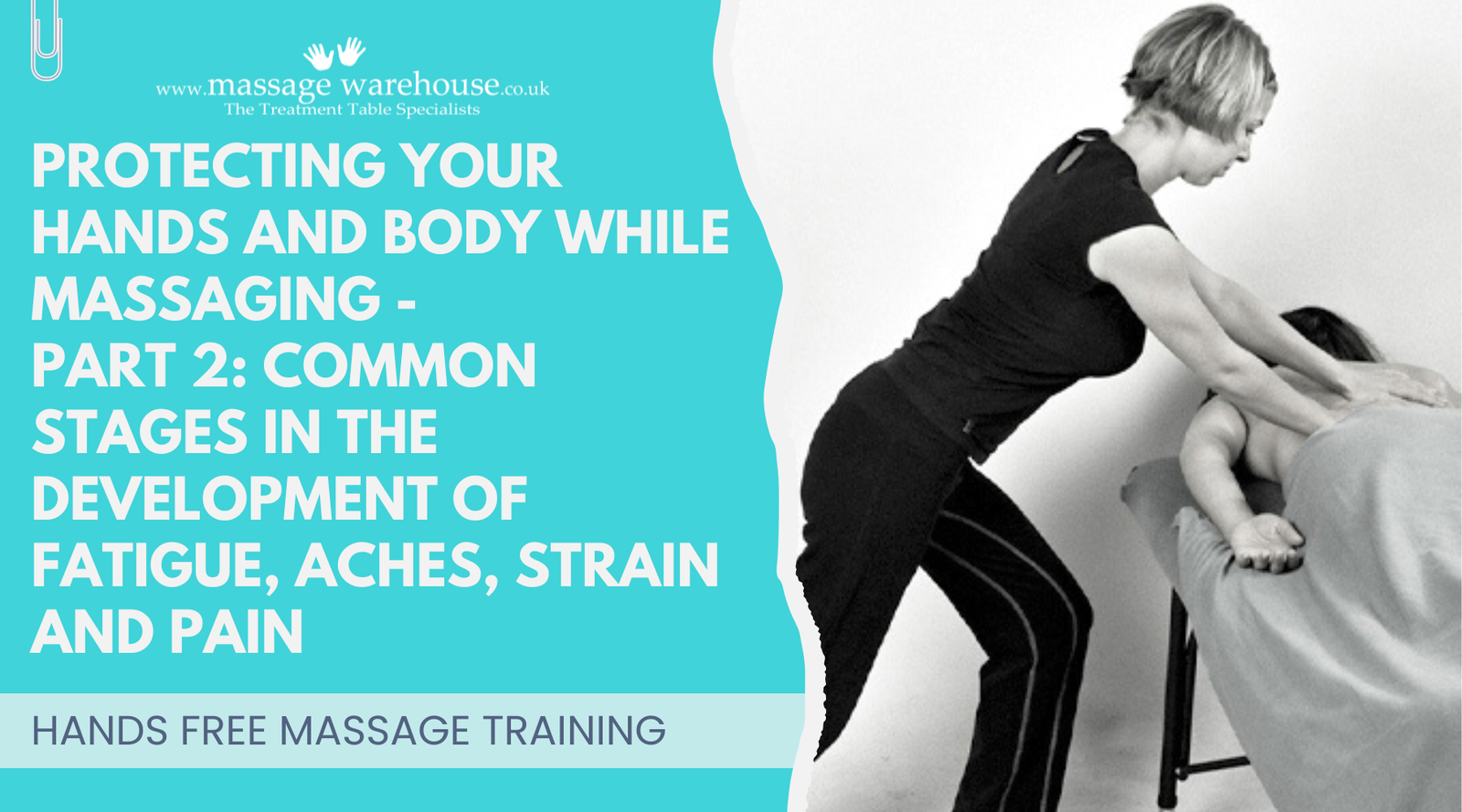

In Part 1 of this series, we discussed applying pressure and the possible resulting strain. Let's turn our attention now to 5 warning signs to look out for and 1 main solution to working smart, not hard!
Massage practitioners generally notice strains developing in gradual stages. This can alert us to problems. It's important to be aware of these so that you can address them before they get to the extreme stage.
1. Feeling strain DURING massage sessions
You feel a momentary twinge (most often in parts of your hands) as you do certain techniques, which stops when you aren't doing the technique.
2. Feeling strain AFTER massage sessions
If you are left with discomfort or strain at the end of a session. This is more serious, even if it goes away after a short time, or you need bodywork treatments to release it.
3. RECURRING or LINGERINGACHES or PAINS. These are RED FLAGS!!
Massage is a concentrated physical activity, so you would expect to feel pleasantly tired after a working day, as one would after any physical workout or after a day of manual labour.
However, if you feel significant pain which lingers on for more than a short time or regularly recurs, you definitely need to look at the way that you work. For example, pain in the hands that is only relieved with painkillers, or having to immerse your hands in ice water or under a heat lamp, or constantly aching shoulders, are major red flags.
4. WAKING in the night with ACHES or PAIN
Sometimes this may be the first thing that practitioners become aware of.
This happened to Darien at an early stage of his career. Without having noticed anything more than achy tiredness in one wrist, he woke in the night (when he was most relaxed) to feel sudden shooting pains through that wrist.
This alerted him to the need to look at how he was delivering massages and searching for better ways of working.
5. PERMANENT pain
Some people feel that they should ignore the pain and 'soldier on'. Darien's had people tell him that their hands or wrists are so sore at the end of each working day that they can only switch off the pain with painkillers. This is not sustainable. Continuing to operate at this level will cause permanent damage.
Simple solutions: Self-monitoring and Hands Free Massage Training
So it's important to monitor how you use your hands and body during massage sessions, so that you notice which techniques are harder on your body (and could create fatigue, soreness and strain over time) and find easier ways of working. Incorporate a quick check-in on your hands and body before, during and after massagesessions to notice any discomfort.
One step up from that, you might want to consider getting some Hands Free training from experienced trainers so you can learn to use your forearms and elbows more and (as we teach it) dynamic body use to support you to work wisely and prevent strains all over your body.
The takeaway
The development of strain rarely happens all at once. More often, it unfolds in stages, from fleeting twinges during a session to lingering aches, disrupted sleep, and eventually persistent pain. The earlier these signs are recognised, the easier they are to address.
Some fatigue after a working day is normal, you're doing manual labour. Pain is not. When discomfort lingers, recurs, or begins to interfere with rest and daily life, it's your body signalling that something in the way you are working needs attention. Ignoring these signals or "pushing through" may seem manageable in the short term, but it greatly increases the risk of long-term injury and shortened career longevity.
Self-monitoring is, therefore, an essential professional skill. Paying attention during sessions, checking in with your body afterwards, and noticing patterns over time allows you to make informed changes before strain becomes damage.
The good news is that strain is not an inevitable part of massage work. With awareness, timely adjustments, and smarter ways of using your body, it is possible to reduce effort, protect your hands, and continue working with strength and confidence. In the final part of this series, we'll explore how to do exactly that, working most effectively, with the least strain on your body.
This article is excerpted from Dynamic Body Use for Effective, Strain-Free Massage (Lotus Publishing, 2008), to be republished in a new edition, Delivering Effective, Strain-Free Massage in 2026.
About the Authors

Darien Pritchard from Dynamic Massage and Hands Free Massage Training, has been a massage trainer since 1982, and has served on the General Council for Massage Therapy (UK). He wrote the career-maintenance book Dynamic Bodyuse for Effective Strain-Free Massage (2008), and the student text Anatomy, Physiology and Pathology for Massage (2nd ed, 2023). For four decades, Darien has pioneered a focus on how massage practitioners can protect their hands and body whilst using them most effectively, including developing the original Hands Free Massage training 25 years ago - the skilful, sensitive use of the forearm and elbow to save the hands.

Leora Sharp from Hands Free Massage Training, has been a massage practitioner since 2008 and very early on in her career, realised the importance of needing to work as Hands Free as possible. To that end, in 2009 she trained with Darien and was so blown away with Hands Free Massage, that she offered to assist him on his 8 Day Advanced training. Her role slowly transformed into co-teacher and she then started teaching solo in 2016. She is continually bowled over how amazing HFM is and the benefits it brings to practitioners to sustain their careers. Alongside teaching HFM, Leora has a private practice at Neal’s Yard in Bath and designs websites for complementary health professionals.

Learn how massage therapists can attract new clients and grow their massage business with a simple “Recommend a Friend” strategy designed to turn trusted client relationships into personal referrals.

Bookkeeping can be easy to put off when you’re busy seeing clients. Discover simple habits to help massage therapists stay organised, track expenses and feel more in control of their massage business finances.

How are massage therapists coping with the UK heatwave? We asked our therapist community to share their best tips for staying cool, keeping clients comfortable, and working safely through hot weather. From portable air conditioning and cooling massage products to hydration, scheduling changes and treatment room hacks, discover practical advice from real massage therapists that you can start using today.